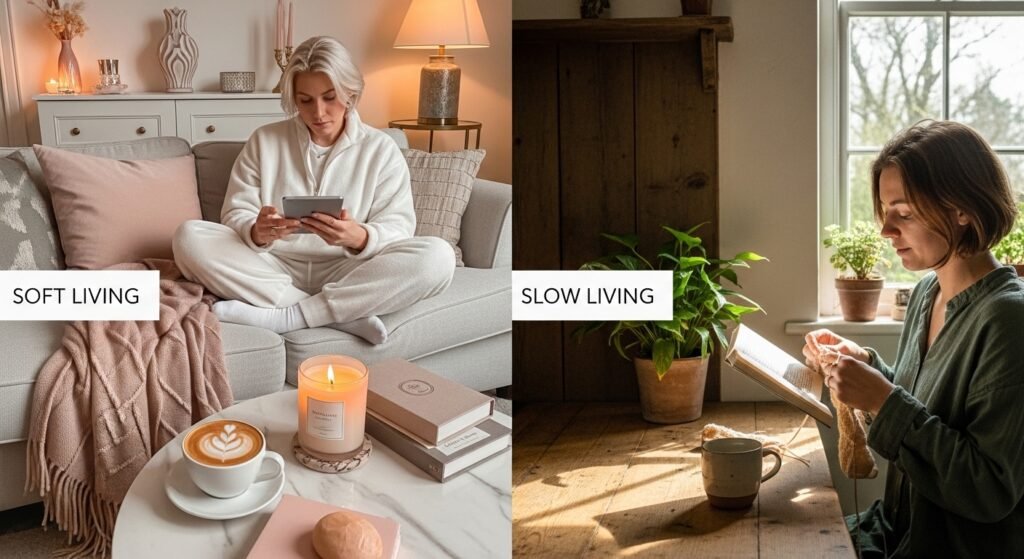
In today’s fast-paced digital world, many people are searching for a calmer and more meaningful way of living. Constant pressure, deadlines, and social expectations have made burnout increasingly common, leading individuals to rethink their lifestyles. One of the most popular modern lifestyle trends is Soft Living, which focuses on comfort, emotional balance, and gentle daily routines. Alongside it, the concept of slow living has also gained attention. While both approaches seem similar, they have distinct philosophies and outcomes.
Soft Living represents a lifestyle centered around ease, emotional softness, and self-compassion. It encourages individuals to reduce stress, prioritize mental well-being, and create a peaceful daily rhythm. This article explores Soft Living in detail, compares it with slow living, and explains how both approaches can transform modern life.
Understanding Soft Living in Modern Lifestyle
Soft Living is a lifestyle approach that focuses on reducing stress and creating a gentle, comfortable way of living. It is not just about slowing down but about choosing ease in every aspect of life. From daily routines to personal relationships, Soft Living encourages people to avoid unnecessary pressure and embrace emotional comfort.
Unlike productivity-driven lifestyles, Soft Living allows individuals to prioritize rest, healing, and emotional well-being. It is especially popular among people who feel overwhelmed by modern expectations and want a more balanced approach to life.
Core Elements of Soft Living
| Element | Description | Lifestyle Benefit |
|---|---|---|
| Emotional comfort | Prioritizing mental peace | Reduced stress |
| Gentle routines | Flexible daily structure | Better balance |
| Self-compassion | Avoiding self-criticism | Improved confidence |
| Rest-focused living | Valuing rest as essential | Higher energy levels |
| Mindful choices | Intentional decision-making | Greater satisfaction |
These elements define the foundation of Soft Living and distinguish it from other lifestyle movements.
Understanding Slow Living as a Lifestyle
Slow living is a lifestyle philosophy that encourages people to slow down their daily pace and focus on mindfulness. It emphasizes quality over quantity and encourages individuals to be fully present in their activities. Unlike fast-paced modern life, slow living promotes awareness, simplicity, and intentionality.
People who follow slow living often reduce multitasking, limit distractions, and focus on meaningful experiences. It is commonly associated with minimalism, nature connection, and mindful consumption.
Soft Living vs Slow Living: Key Differences
Although Soft Living and slow living share similarities, they are not the same. The main difference lies in their focus and emotional approach.
Soft Living is centered around emotional ease and comfort, while slow living focuses more on pacing and mindfulness. Soft Living prioritizes how you feel, whereas slow living focuses on how you experience time.
Comparison Table
| Aspect | Soft Living | Slow Living |
|---|---|---|
| Main Focus | Emotional comfort | Mindful pace of life |
| Lifestyle Goal | Reduce stress and pressure | Increase awareness and presence |
| Daily Approach | Flexible and gentle routines | Structured but slow routines |
| Emotional Element | High importance | Moderate importance |
| Productivity | Balanced and optional | Controlled and intentional |
This comparison shows that Soft Living is more emotionally driven, while slow living is more time and awareness driven.
Why Soft Living Is Becoming Popular
Modern life is filled with stress, digital overload, and constant pressure to perform. Many people feel exhausted by the expectation to always be productive. Soft Living has gained popularity because it offers a more compassionate alternative.
Instead of pushing individuals to do more, it encourages them to do less but with more intention. It allows space for rest, emotional healing, and self-care without guilt.
Social media also plays a role in spreading awareness of Soft Living. Many influencers and wellness creators promote soft routines, cozy environments, and stress-free habits.
Soft Living in Daily Routine
Soft Living can be applied in everyday life through simple changes. It does not require major lifestyle shifts but focuses on small adjustments that improve well-being.
For example, waking up without rushing, avoiding unnecessary commitments, and allowing flexible schedules are all part of this lifestyle. Creating a calm environment at home also supports emotional balance.
Daily Soft Living Practices
| Practice | Purpose | Result |
|---|---|---|
| Slow mornings | Start day peacefully | Reduced anxiety |
| Digital breaks | Limit screen exposure | Better focus |
| Rest periods | Include intentional rest | Improved energy |
| Gentle planning | Avoid over-scheduling | Lower stress |
| Comfort routines | Create cozy habits | Emotional stability |
These practices make Soft Living practical and easy to integrate into modern routines.
Emotional Benefits of Soft Living
One of the strongest advantages of Soft Living is emotional healing. Many individuals experience stress due to constant pressure from work, studies, or social expectations. Soft Living helps reduce this emotional burden.
It encourages people to accept their limits and treat themselves with kindness. This leads to improved mental health, reduced anxiety, and greater life satisfaction.
It also helps individuals develop healthier relationships because they are less emotionally overwhelmed and more present in interactions.
Challenges of Adopting Soft Living
While Soft Living offers many benefits, it also comes with challenges. One common challenge is societal pressure. Many people feel judged for slowing down or prioritizing rest over productivity.
Another challenge is maintaining balance. Some individuals may misunderstand Soft Living as complete inactivity, which can lead to lack of structure.
Financial responsibilities can also make it difficult to fully adopt this lifestyle. However, Soft Living is flexible and can be adapted to different life situations without completely changing responsibilities.
How Soft Living Differs in Work Life
In professional environments, Soft Living does not mean avoiding work. Instead, it promotes healthier work habits. It encourages setting boundaries, avoiding burnout, and maintaining a balanced workload.
Employees practicing Soft Living often focus on quality work instead of excessive overtime. This leads to better performance and long-term sustainability.
Companies are also beginning to recognize the importance of mental well-being, introducing flexible schedules and wellness programs.
Combining Soft Living and Slow Living
Although different, Soft Living and slow living can complement each other. Many people choose to combine both approaches for a balanced lifestyle.
Slow living helps manage time and attention, while Soft Living supports emotional well-being. Together, they create a lifestyle that is both mindful and emotionally healthy.
For example, a person might follow slow living by reducing multitasking and apply Soft Living by allowing rest without guilt. This combination creates a more complete approach to modern wellness.
Future of Soft Living
The future of Soft Living looks promising as more people prioritize mental health and emotional well-being. With increasing awareness about burnout and stress, individuals are shifting toward gentler lifestyles.
Workplaces, schools, and communities are also becoming more supportive of balanced living. As technology continues to grow, the need for emotional balance becomes even more important.
Soft Living is expected to evolve into a mainstream lifestyle choice rather than just a trend.
Conclusion
Soft Living represents a powerful shift in how people approach daily life. It focuses on emotional comfort, self-care, and reducing unnecessary pressure. While slow living emphasizes mindful pacing, Soft Living prioritizes emotional well-being and gentle routines.
Both lifestyles offer valuable benefits, but Soft Living stands out for its focus on kindness toward oneself. In a world that often demands constant productivity, choosing softness can be a meaningful way to restore balance and peace.