
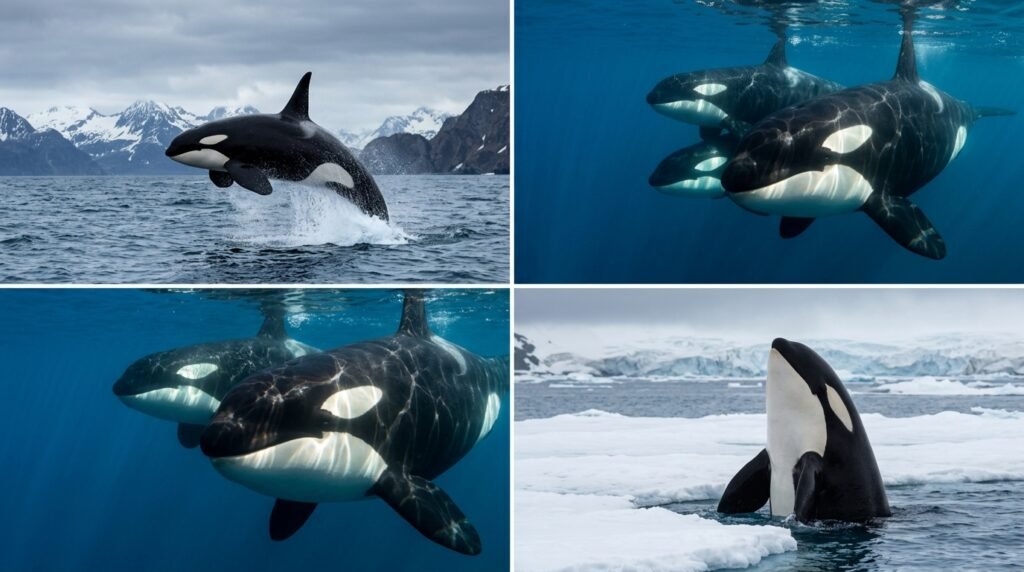
The Orca Killer Whale is one of the most fascinating marine mammals on Earth. Known for its intelligence, remarkable hunting abilities, and complex social behavior, this apex predator dominates oceans across the globe. Despite the name “killer whale,” orcas are actually the largest members of the dolphin family. Their striking black-and-white appearance, sophisticated communication, and close family bonds have captured the attention of scientists and wildlife enthusiasts alike. In this guide, you’ll discover the biology, habitat, feeding habits, conservation status, and incredible adaptations that make the Orca Killer Whale one of the ocean’s most extraordinary creatures.
Table of Contents
| Section | Description |
|---|---|
| Introduction | Overview of orcas |
| Physical Characteristics | Size, color, and anatomy |
| Habitat | Global distribution |
| Diet | Feeding strategies |
| Hunting Behavior | Cooperative techniques |
| Social Structure | Family life and communication |
| Intelligence | Learning and problem-solving |
| Threats | Environmental challenges |
| Conservation | Protection efforts |
| FAQs | Common questions |
What Is an Orca Killer Whale?
The Orca Killer Whale belongs to the species Orcinus orca. Although commonly called a whale, it is scientifically classified as the largest dolphin species. Orcas inhabit every major ocean, from icy Arctic waters to tropical coastlines.
Scientists consider orcas apex predators because no natural marine animal regularly hunts healthy adults. Their adaptability allows them to thrive in a wide variety of environments while developing specialized hunting methods depending on location and available prey.
Quick Facts
| Feature | Details |
|---|---|
| Scientific Name | Orcinus orca |
| Family | Dolphin (Delphinidae) |
| Average Length | 20–32 feet |
| Average Weight | 3–6 tons |
| Lifespan | 30–90 years |
| Diet | Carnivorous |
| Habitat | Oceans worldwide |
| Conservation Status | Data varies by population |
Physical Characteristics of the Orca Killer Whale
The unmistakable black-and-white coloration makes orcas easy to identify. Their streamlined bodies help them swim efficiently, while powerful tails generate impressive speed.
Adult males are generally larger than females and possess tall, triangular dorsal fins that may exceed six feet in height. Females have shorter, curved dorsal fins.
Other notable features include:
- White eye patches
- Robust muscular body
- Large flippers
- Powerful jaws with sharp conical teeth
- Excellent underwater vision and hearing
These characteristics enable orcas to dominate marine ecosystems.
Habitat and Global Distribution
One of the greatest strengths of the Orca Killer Whale is its adaptability. Orcas can survive in almost every ocean on Earth.
They are frequently found in:
- Arctic Ocean
- Antarctic waters
- North Pacific
- North Atlantic
- Coastal Norway
- Alaska
- Canada
- New Zealand
Different populations specialize in different environments. Some remain close to coastlines, while others spend much of their lives in the open ocean.
Water temperature matters less than food availability, which explains why orcas occupy such diverse habitats.
Diet and Feeding Habits
Orcas are carnivores with diets that vary depending on geography and culture within their pods.
Common prey includes:
| Prey | Hunting Method |
|---|---|
| Salmon | Fast pursuit |
| Tuna | Group attack |
| Seals | Ice-edge ambush |
| Sea lions | Shoreline chase |
| Penguins | Cooperative hunting |
| Squid | Deep-water diving |
| Sharks | Precision attacks |
| Rays | Bottom feeding |
Some populations specialize almost exclusively in fish, while others hunt marine mammals.
This dietary specialization is passed from one generation to another, making each pod culturally unique.
Hunting Strategies That Make Orcas Exceptional
The hunting skills of orcas are among the most sophisticated in the animal kingdom.
Instead of relying solely on strength, they cooperate as a team.
Some remarkable techniques include:
Wave Washing
Groups create powerful waves to wash seals off floating ice.
Carousel Feeding
Pods herd schools of fish into tight balls before stunning them with tail slaps.
Coordinated Ambush
Several individuals surround prey while others block escape routes.
Silent Hunting
Certain populations reduce vocalizations when approaching sensitive prey that can detect sound.
These behaviors demonstrate planning, communication, and teamwork rarely seen among marine predators.
Social Life and Family Structure
Orcas live in close-knit family groups called pods.
Unlike many mammals, offspring often remain with their mothers for life.
A pod usually includes:
- Grandmothers
- Mothers
- Adult sons
- Adult daughters
- Young calves
This strong family bond allows knowledge to pass through generations.
Older females often guide younger members toward reliable feeding grounds, increasing survival rates for the entire group.
Communication and Intelligence
Researchers consider orcas among the most intelligent animals on Earth.
They communicate through:
- Clicks
- Whistles
- Pulsed calls
Each pod develops unique vocal patterns similar to human dialects.
Scientists have observed behaviors suggesting advanced intelligence:
| Behavior | Purpose |
|---|---|
| Tool use | Problem solving |
| Cooperative hunting | Teamwork |
| Vocal learning | Communication |
| Play | Cognitive development |
| Teaching calves | Knowledge transfer |
| Memory | Navigation |
Brain size alone does not define intelligence, but the complex social interactions of orcas strongly indicate advanced cognitive abilities.
Why Orcas Are Called Killer Whales
The name “killer whale” originated from ancient sailors who witnessed orcas hunting large whales.
Originally they were called “whale killers.”
Over time, the phrase evolved into “killer whale.”
Despite the intimidating name, there are very few documented cases of wild orcas intentionally harming humans.
Most encounters in nature are peaceful and often characterized by curiosity.
Threats Facing Orca Populations
Although they sit at the top of the food chain, orcas face increasing environmental pressures.
Major threats include:
Pollution
Industrial chemicals accumulate in marine food webs, affecting reproduction and immune systems.
Climate Change
Changing ocean temperatures alter fish migration patterns and reduce food availability.
Noise Pollution
Shipping traffic interferes with echolocation and communication.
Declining Fish Stocks
Overfishing reduces prey for fish-eating populations.
Habitat Degradation
Coastal development impacts important feeding areas.
Conservation efforts increasingly focus on protecting ecosystems rather than individual animals.
Conservation Efforts Around the World
Many governments and organizations have introduced measures to protect orcas.
These include:
| Conservation Action | Benefit |
|---|---|
| Marine protected areas | Safeguards habitat |
| Fishing regulations | Protects prey species |
| Pollution controls | Improves water quality |
| Vessel distance rules | Reduces disturbance |
| Scientific monitoring | Tracks population health |
Public education also plays a vital role in promoting responsible marine tourism and protecting ocean biodiversity.
Interesting Facts About Orcas
Here are some fascinating facts:
- Orcas are the largest members of the dolphin family.
- They can swim at speeds exceeding 30 mph.
- Every pod has unique hunting traditions.
- Female orcas often live well beyond menopause.
- They recognize family members through vocal calls.
- Orcas have excellent eyesight both above and below water.
- Different populations rarely interbreed despite sharing oceans.
- Calves learn hunting skills from experienced adults.
These remarkable characteristics continue to inspire marine research around the world.
Why Orcas Matter to Ocean Ecosystems
As apex predators, orcas help maintain ecological balance by regulating prey populations.
Healthy predator populations contribute to healthier marine ecosystems. Their presence can influence the behavior and distribution of other marine animals, creating cascading effects that support biodiversity.
Studying orcas also provides valuable insights into ocean health, pollution levels, and the impacts of climate change. Protecting these animals ultimately benefits countless other marine species and the ecosystems they inhabit.
Frequently Asked Questions
| Question | Answer |
|---|---|
| Are orcas whales or dolphins? | They are the largest members of the dolphin family. |
| How long do orcas live? | Females can live 80–90 years, while males often live 30–60 years. |
| Where do orcas live? | In every major ocean worldwide. |
| What do they eat? | Fish, seals, sharks, squid, and other marine animals, depending on the population. |
| Are wild orcas dangerous to humans? | Wild attacks on humans are extremely rare. |
Conclusion
The Orca Killer Whale stands as one of the ocean’s most extraordinary predators, combining intelligence, teamwork, and adaptability in ways few marine animals can match. From coordinated hunting strategies to lifelong family bonds and sophisticated communication, orcas continue to amaze scientists and nature lovers alike. While they face growing threats from pollution, climate change, and habitat disruption, ongoing conservation efforts offer hope for the future. By understanding and protecting these remarkable marine mammals, we also help preserve the health and diversity of the world’s oceans for generations to come.