
Understanding VR Driver Training
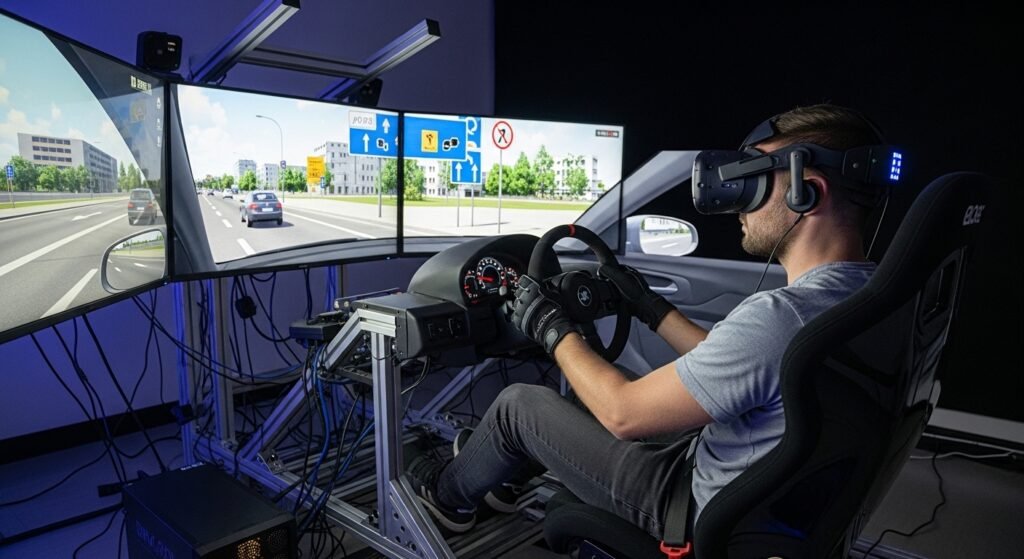
VR Driver Training refers to the use of virtual reality technology to simulate real driving environments. Learners wear VR headsets and interact with a simulated driving setup that replicates roads, traffic, weather conditions, and unexpected hazards. This immersive experience allows users to practice driving skills in a controlled and safe environment.
Unlike traditional lessons that depend on real vehicles and instructors, VR Driver Training provides consistent, repeatable, and customizable learning experiences. It ensures that every learner gets exposure to a wide range of driving situations that may not occur during regular lessons.
The Limitations of Traditional Driving Lessons
Traditional driving lessons have been the standard for decades, but they come with several limitations that affect learning outcomes. One major issue is limited exposure to diverse driving conditions. Learners may not encounter heavy traffic, extreme weather, or emergency situations during their lessons.
Another drawback is the risk factor. Beginners often feel nervous while driving on real roads, which can lead to mistakes and accidents. Additionally, the cost of fuel, vehicle maintenance, and instructor fees can make traditional lessons expensive over time.
Enhanced Safety with VR Driver Training
Safety is one of the biggest advantages of VR Driver Training. Learners can make mistakes without any real-world consequences, allowing them to learn from errors without fear. This is particularly beneficial for beginners who may feel anxious or overwhelmed.
In a virtual environment, users can practice handling dangerous situations such as brake failure, sudden obstacles, or poor weather conditions. These scenarios are difficult to replicate safely in traditional lessons.
Table: Safety Comparison
| Feature | VR Driver Training | Traditional Lessons |
|---|---|---|
| Risk of Accidents | None | High for Beginners |
| Exposure to Hazards | Unlimited | Limited |
| Safe Learning Environment | Fully Controlled | Unpredictable |
| Error Consequences | No Real Damage | Potential Damage/Injury |
Realistic and Immersive Learning Experience
One of the key reasons VR Driver Training stands out is its immersive nature. The technology creates a realistic driving environment that closely mimics real-world conditions. From city streets to highways and rural roads, learners can experience various scenarios in one place.
The use of 3D visuals, sound effects, and interactive controls enhances engagement and helps learners retain information better. This immersive experience makes learning more enjoyable and effective compared to traditional methods.
Cost-Effectiveness and Accessibility
VR Driver Training can significantly reduce the overall cost of learning to drive. Traditional lessons require fuel, vehicle maintenance, and instructor fees, which can add up quickly. In contrast, VR-based training systems require a one-time setup cost and minimal ongoing expenses.
Additionally, VR training can be accessed at any time, making it more convenient for learners. There is no need to schedule lessons or travel to a specific location, which saves both time and money.
Table: Cost Comparison
| Cost Factor | VR Driver Training | Traditional Lessons |
|---|---|---|
| Fuel Costs | None | High |
| Vehicle Maintenance | None | Required |
| Instructor Fees | Minimal/Optional | Mandatory |
| Long-Term Expense | Low | High |
Improved Confidence and Skill Development
Confidence plays a crucial role in driving. Many beginners struggle with anxiety when they first start driving on real roads. VR Driver Training helps overcome this challenge by allowing learners to practice in a stress-free environment.
By repeatedly practicing different scenarios, learners build confidence and develop muscle memory. This leads to better decision-making and quicker reaction times when they transition to real-world driving.
Personalized Learning Experience
Another advantage of VR Driver Training is the ability to customize lessons according to individual needs. Each learner can progress at their own pace and focus on areas where they need improvement.
For example, a learner struggling with parking can practice that specific skill multiple times until they master it. Traditional lessons often follow a fixed structure, which may not suit everyone.
Exposure to Diverse Driving Scenarios
In traditional lessons, learners are limited to the conditions present during their training sessions. However, VR Driver Training allows users to experience a wide range of scenarios, including:
- Night driving
- Heavy traffic
- Rain, fog, and snow conditions
- Emergency situations
- Highway and urban driving
This comprehensive exposure prepares learners for real-world challenges more effectively than traditional methods.
Environmentally Friendly Approach
VR Driver Training is also an eco-friendly alternative. Traditional driving lessons consume fuel and contribute to carbon emissions. By reducing the need for physical vehicles during the initial learning phase, VR training helps minimize environmental impact.
This makes it a sustainable option for driving schools and learners who are conscious of their carbon footprint.
Faster Learning and Better Retention
Studies suggest that immersive learning techniques improve knowledge retention. VR Driver Training engages multiple senses, making it easier for learners to understand and remember driving concepts.
The ability to repeat scenarios and receive instant feedback accelerates the learning process. As a result, learners often require fewer real-world lessons, saving time and resources.
Instructor Support and Performance Tracking
Modern VR Driver Training systems come with advanced analytics and performance tracking features. Instructors can monitor progress, identify weaknesses, and provide targeted feedback.
This data-driven approach ensures that learners receive personalized guidance, which enhances their overall performance. Traditional lessons rely heavily on subjective observation, which may not always be accurate.
Table: Learning Efficiency Comparison
| Feature | VR Driver Training | Traditional Lessons |
|---|---|---|
| Learning Speed | Faster | Moderate |
| Feedback Accuracy | Data-Driven | Instructor-Based |
| Skill Retention | High | متوسط |
| Practice Opportunities | Unlimited | Limited |
Bridging the Gap Between Theory and Practice
One of the biggest challenges in driving education is applying theoretical knowledge in real-life situations. VR Driver Training effectively bridges this gap by allowing learners to practice what they have learned in a simulated environment.
For example, understanding traffic rules becomes easier when learners can see and respond to real-time scenarios. This practical application reinforces learning and improves overall driving skills.
The Future of Driving Education
As technology continues to advance, VR Driver Training is expected to become a standard component of driving education. Many driving schools and organizations are already adopting this approach to enhance training quality.
The integration of artificial intelligence and machine learning will further improve the effectiveness of VR systems, making them even more realistic and adaptive.

Spotted pak111game and figured why not give it a try. Always up for something different. Let’s see if it’s a winner! Find out more at: pak111game